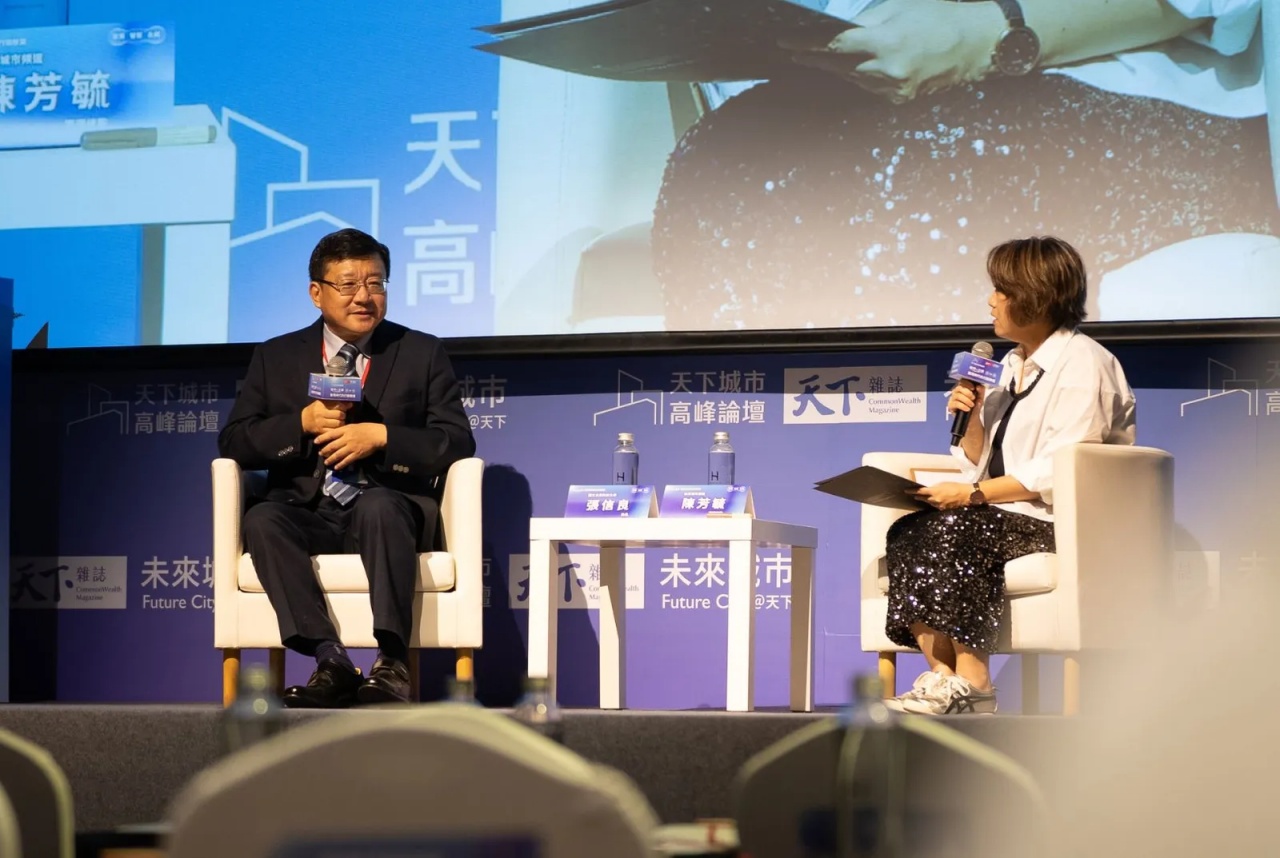
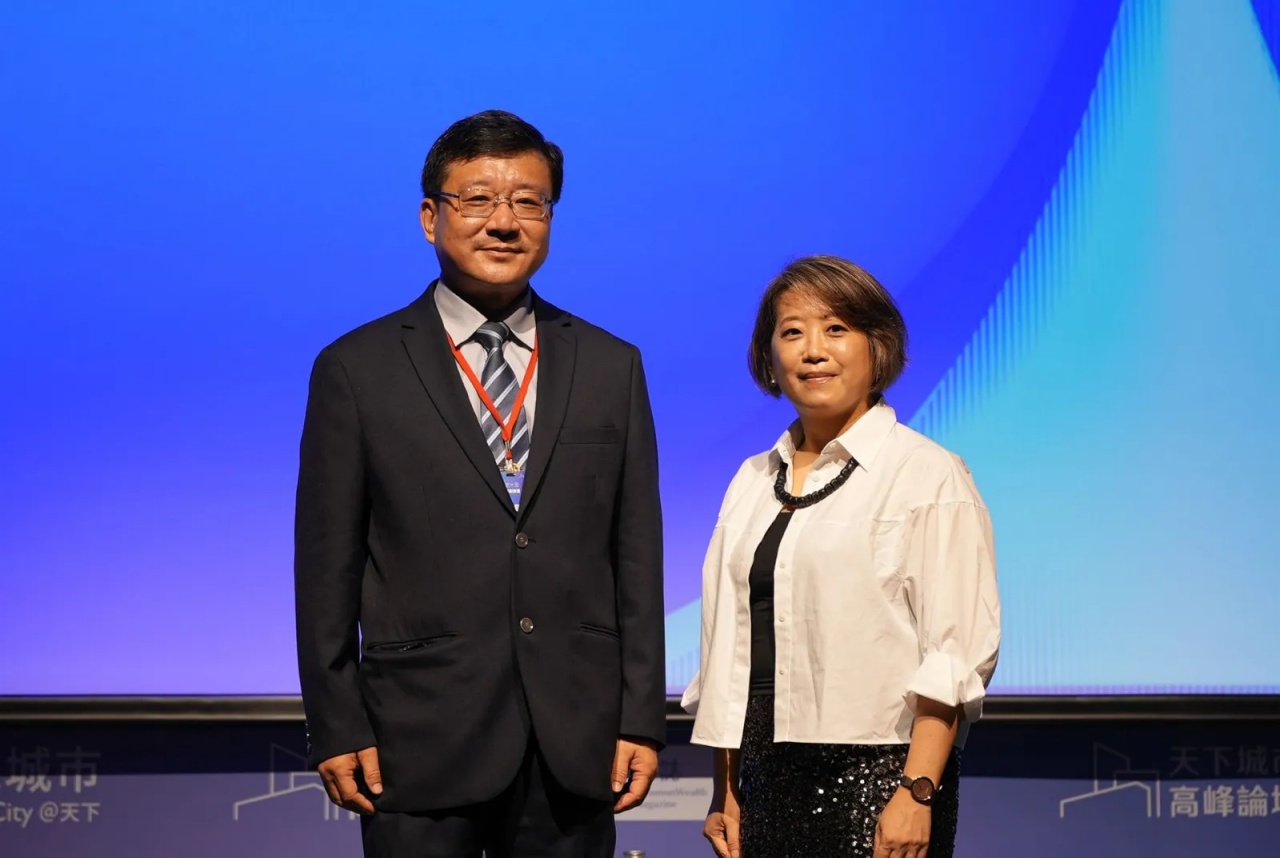
How can a town university become a key engine for urban upgrading? At the "2025 CommonWealth City Forum," National Formosa University (NFU), starting from the principle of University Social Responsibility (USR), is demonstrating how local universities can drive a city's future. By spanning the city borders of Yunlin and Chiayi, and utilizing diverse smart cross-disciplinary solutions from AI to drones, and from USR to industry collaboration, NFU is providing a powerful example.
"Although we are a small school, we are committed to continuously expanding our university social responsibility," said NFU President Chang Shing-Liang, expressing a firm resolve with a humble attitude. In central Taiwan, Huwei is a small town where cultural development and industrial dynamics are closely linked. NFU regards the "local community" as its field for contribution, extending educational resources to towns and industries, allowing the university to be more than just a place of cultivation within walls, but also a public resource for the community, venues, and daily life.
It is hard to imagine that as a vocational and technical university, NFU is responsible for operating eight public venues within Yunlin County! From sports halls to arts centers, these spaces serve as venues for student activities and platforms for establishing local public culture. President Chang Shing-Liang stated that student education should not be limited to classrooms; learning within the community and local settings enables classroom knowledge to interact and combine with the outside world, achieving true internalization.
This "university town" model is both an educational philosophy and a social practice. Whether it's organizing sports events, opening concert halls, or supporting local arts and cultural groups, NFU is adopting an open posture, integrating education with life, and allowing the university to become a vibrant source of regional vitality.
From Yunlin to Chiayi: Paving the Way for the National Drone Team
The reason for National Formosa University's (NFU) link to the nation's key "drone industry" lies in the school's professional foundations. NFU possesses the nation's only Department of Aircraft Engineering, which has long focused on aircraft maintenance and avionics expertise, with graduates widely employed by civil aviation companies. This deep foundation is precisely the key reason why NFU can play such an important role in Taiwan's drone industry layout.
Therefore, NFU is leading the "National Drone Team" development in Chiayi County and establishing three laboratories to connect testing, research and development, and applications. Drone applications are broad and diverse, extending beyond military topics to cross into scenarios such as power maintenance, agricultural pest control, police pursuit, coast guard rescue, and more. Chang Shing-Liang provided examples: Taipower now cleans high-voltage transmission towers using drones; agricultural pest detection can utilize AI image analysis for precise pesticide spraying; and even in disaster areas without communication signals, drones can serve as a disaster relief alternative solution.
To facilitate continuous breakthroughs in drone application technology, the Ministry of Economic Affairs is promoting the "Drone AI New Talent" program at NFU. Through short-term intensive courses, students can be trained to enter industry internships after just four months. "Even in the small town of Huwei, you can learn the most advanced technology, allowing young people to connect directly with future industries," said Chang Shing-Liang.
Cross-Disciplinary Open Collaboration: Schools, Industries, and Cities Co-create and Coexist
In fact, the establishment of the Yunlin High-Speed Rail Station and the National Long-term Care Center has injected over tens of billions of resources into the region, making Huwei a new hub for development in central Taiwan. NFU, in turn, has undertaken smart transportation tasks related to the high-speed rail, including autonomous bus trial programs, further transforming the school's R&D capabilities into solutions for urban transportation.
"Although NFU is small, it makes us work harder to secure resources. From autonomous vehicles to drones, and even extending to the maintenance and operation of river floodplains, we are pushing education into broader fields." This "no limits" attitude allows NFU to continuously cross boundaries, expanding from Yunlin to Chiayi, and even influencing the overall development landscape of central Taiwan.
In his view, education is not just about training students with skills to enter enterprises; it's about allowing schools, industries, and cities to form a triangular symbiotic relationship. "Difficult environments can often bloom into more beautiful flowers," emphasized Chang Shing-Liang. If local universities can effectively utilize their geographic location advantages, they can become an important force in promoting balanced regional development.
"The future of cities might not only emerge from science parks or large metropolises. Vocational and technical universities like NFU can also drive innovation locally and change the appearance of cities," Chang Shing-Liang believes. The concept of the "university town" is about radiating the great energy of university social responsibility outwards with an open, practical, and cross-disciplinary attitude, allowing single-point projects to be sustained. "Reach out your hand, shake hands with more people, and amplify resources through different collaborations." The vision cultivated by NFU in its small town will foresee the infinite possibilities of future smart cities.